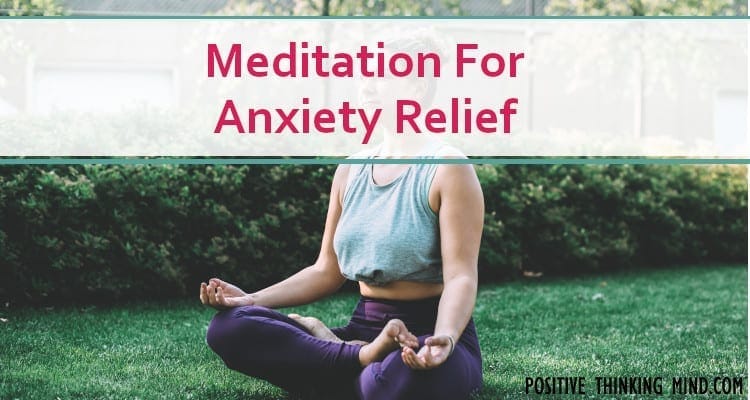
Meditation For Anxiety Relief
Living with anxiety is like being followed by a voice that knows all your insecurities and uses them against you. It gets to the point when it’s the loudest voice in the room. The only one you can hear. – POPSUGAR
Meditation for anxiety relief is ancient and well-practiced exercise. It is guaranteed to bring positive results in reducing symptoms of anxiety and depression.
Anxiety is a mental health disorder that is characterized by uneasy feelings of worry, tension, and fear that dramatically impacts one’s thinking and functioning.
Anxiety is a silent killer that slowly and steadily rips a person apart. Even though a person may look normal and unaffected on the outside, anxiety tends to overwhelm the individual with unwanted thoughts and beliefs, thereby impairing their ability to perform day-day activities.
Anxiety affects all– the rich, the poor, the believer, and the unbeliever. It does not discriminate, and it is impossible to remain unaffected by anxiety.
Meditation For Anxiety Relief
However, this condition becomes a cause for concern when it interferes with an individual’s daily life, causing them to become withdrawn and unable to function.
There are several ways one can treat anxiety. If you want a guaranteed assurance of positive results without the dependence on anti-anxiety drugs and medication and a host of other brain benefits, you may resort to -Meditation for anxiety relief.
Meditation for anxiety relief has no side-effects, unlike anxiety relief from medications. It helps you feel happier, calmer and enables the growth of brain regions that are involved with learning and memory processes, emotion regulation, self-referential processing, and perspective-taking.
So, what exactly is meditation?
Meditation is a mental exercise that is done by concentrating on bodily functions like breathing, sensing, and feeling. It also requires one to purposefully do specific actions like chanting, taking deep breaths, walking, etc.
It helps an individual attain a mentally and emotionally calm state and can be done both by adults and children.
Meditation for anxiety relief is of different types. Very often, the question- “Which type of meditation is best to help with anxiety?” is asked. Meditation affects each individual differently per their personality and life situation.
Since no two individuals are the same, it is essential to practice the different types of meditation to find one that is best suited for the individual.
Given below is a description of the various types of meditation that I practice for anxiety relief.
Loving-Kindness Meditation
Loving-Kindness Meditation, also known as “Metta Bhavana” in pali language, is a method of developing unconditional, and selfless love. You will be promoting respect and acceptance of oneself and others.
When we accept ourselves wholly with our positives and negatives, we find it easier to accept others. This meditational practice keeps this principle in mind and is very useful for individuals suffering from lower self-esteem, anger, relationship issues, stress, and resentment.
The essential requirements for this meditation are comfortable seating and a non-distracting place to meditate. While breathing in deep breaths, the individual visualizes receiving unconditional and unrestricted love from loved ones.
The individual then focuses on sending out love and kindness out into the world. Also, the individual can meditate on proverbial phrases like: “May I be happy,” “May I be healthy,” “May I be free of pain” etc. and repeat them till he/she feels an attitude of loving-kindness.
One can chant these messages towards oneself or send out these positive messages to others by reframing the statements to – “May she be happy,” “May she no longer be in pain” etc. This meditational practice has been found to significantly reduce feelings of anxiety, stress, and depression and increase feelings of happiness and peace.
Body Scan Meditation
Body Scan meditation is a type of mindfulness practice which promotes greater awareness of the physical body. It helps an individual connect with and become aware of the many sensations experienced in their physical body.
By being aware of these sensations, an individual is well-prepared to identify and deal with symptoms of stress and anxiety. This meditational practice should be done while lying down, sitting, or in other postures. In this practice, while taking deep breaths, attention is paid to each body part either starting from the top, i.e., the head or the lower body, i.e., the toes.
When each body part is scanned, the individual is required to pay attention to how they feel, when focusing on the toes, the individual needs to identify if their toes are hot or cold, itchy, tingly, heavy, tensed or firm, etc.
Doing a body scan helps the individual identify any source of physical pain and a link between these physical sensations and an individual’s emotions. This meditation, according to research, dramatically helps relieve symptoms of stress and anxiety.
Guided Meditation
As the name suggests, this practice is a guided form of meditation. The guide can either be a teacher or a therapist.
The voice can also be a voice recording of the teacher/therapist etc. In this form of meditation, the instructor guides you to visualize or imagine situations or places that you find relaxing and safe at, while taking deep breaths.
It can be your home, a vacation spot, a mountain, or any specific place personalized to you.
The guide asks you to engage your five senses while meditating, i.e., paying attention to what you feel, smell, touch, or taste when in your relaxed place. According to studies, this form of meditation helps calm and restore an individual’s sense of peacefulness.
Chant Meditation
Here you will repeat a calming word or mantra to quiet their minds and prevent distracting thoughts.
The essential requirements for this practice is a quiet place, a comfortable position and a relaxing word like “Om,” “Love” Peace” etc.
Transcendental Meditation
This meditation practice is a Hindu spiritual practice which was founded by the Indian guru- Maharishi Mahesh Yogi. The goal of this meditation is to rise above one’s current state of being.
In this practice, the individual meditates on a chant or a repeated word while taking deep breaths.
According to research, this form of meditation has many benefits:
Helps change your response to stress
Balances nervous system activation
Hormonal balanced levels
Increases brain coherence
All these factors help balance stress and anxiety, thus improving one’s mental health.
Qi Gong
Qi Gong, used by the Chinese, combines the methods of physical movement, meditation, relaxation, and breathing exercises to restore an individual’s peace of mind, health, and physical endurance.
According to this study mentioned in the National Centre for Biotechnology Information, Qi Gong has positive effects on the psychological well-being of chronically ill patients.
Tai Chi
This practice is a gentle form of martial arts in which the individual performs a series of movements or postures slowly and gracefully. Often referred to as “Meditation in motion,” and a growing number of studies support the positive effect of “Tai-Chi” with improvements in symptoms of anxiety and depression.
Yoga
In this meditation practice, the individual focuses on a series of body postures and breathing exercises which require concentration and balance. While doing yoga, an individual is encouraged to focus more on their body movements and pay less attention to the troubling thoughts that cause them to worry.
Yoga helps reduce the intensity of this pain and helped improve their overall mental health.
Related Article: 11 Quick And Easy Yoga Exercises For Anxiety Relief
Breath Awareness Meditation
This practice is a simple and favored meditation practice. It requires the individual only to ignore the thoughts that enter their mind.
The individual does this by taking slow and deep breaths, with each breath cycle lasting about 6-9 seconds. Apart from anxiety relief, this meditational practice has many benefits, which include improvement in physical and cognitive performance.
Walking Meditation
As the name suggests, this is a movement-based meditation where the individual walks barefoot and focuses only on the walking movement while taking deep breaths.
The goal is to draw energy and become one with the Earth. This is useful for individuals who cannot sit still for long periods.
Walking meditation has been found to invigorate one both mentally and physically and help reduce symptoms of anxiety and depression.
Object Focused Meditation
An individual focuses all their energy and attention on a particular object, e.g., the flame of a candle, a stone, a statue, etc.
By focusing on the object, the individual directs his energy and attention from nagging thoughts and worries. This aspect, according to studies, helps improve concentration and reduce symptoms of anxiety and stress.
The practices mentioned above are proven ways one can use meditation for anxiety relief. You can quickly learn and improve your mental health along with physical performance.
Related Post: Grounding Techniques For Anxiety
Positive Thinking Mind
Master Life Coach
Certified life coach, course creator, YouTube and Podcast Creator, dedicated to transforming lives through personal growth, mental wellness, and nurturing a positive mindset. My mission is to make life better for individuals seeking self-improvement and confidence-building. About Me
You'll be handed a self-esteem-boosting set of tips and abilities, actions and best practices that can continually and repeatedly raise your self-image and self-esteem. You're capable of so much and deserve to be happy!
This is what differentiates winners from losers.
“The Power Of Positive Thinking” is the ultimate blueprint for people who want to progress further in life with a simple mindset switch.
Welcome to PositiveThinkingMind.com! We’re on a mission to bring solutions that shape people's lives through personal growth, mental wellness, a positive mindset and make life better. Let Your Light Shine!
PositiveThinkingMind.com is a participant in the Amazon Services LLC Associates Program, an affiliate advertising program designed to provide a means for sites to earn advertising fees by advertising and linking to amazon.com and affiliated sites.
Categories
Disclaimer: This site contains affiliate links, which means we earn a commission if you purchase through our link at no additional cost to you. Articles and information on this site is not medical advice. If you have mental problems, please talk to a doctor or therapist to get the help you deserve. Please read our full disclaimer .
Quick links
Newsletter
Subscribe now get tips.
© 2025 Positive Thinking Mind LLC