Mindfulness Exercises For Anxiety
Mindfulness exercises for anxiety are a popular therapeutic technique among people of all ages, and there are many reasons for their popularity.
It can be done by yourself anywhere or everywhere without the aid of a therapist or professional
It does not require you to take any form of medication
It’s inexpensive, and most importantly, it helps you gain control over your mind and helps relieve symptoms of anxiety.
I find anxiety originates in my mind when I start thinking negatively about things, and our thoughts are compelling and significantly impact how we feel, believe, and act.
Negative thoughts reinforce negative emotions, which lead to negative behavior that further causes us to harbor negative thoughts.
Learning how to Handle Our Negative Thoughts In A Positive Way is key to a better mind and a happier life.
Thinking negatively becomes a continuous cycle that causes us to fall further into depression and anxiety.
How Mindfulness Exercises Help Anxiety
Mindfulness exercises for anxiety help stop this cycle by helping you take your focus away from negative thinking and channel this awareness to your breathing and bodily sensations.
Mindfulness exercises for anxiety are defined as an act of intensely focusing or being aware of what you are sensing, feeling, or experiencing.
When practicing this activity, I try not to judge or rationalize my actions and let go of the thoughts that pass through my mind.
Initially, it may be difficult not to pay attention to your thoughts.
But it will become easier by continuing to practice and making a genuine effort; you’ll be better at practicing mindfulness exercises.
According to Steven F. Hick, mindfulness activities are classified into two types.
Formal and informal meditation practices
Nonmeditation-based exercises.
He describes formal meditation as the practice of sustaining attention on your body, breath or sensations, or whatever arises in each moment.
Informal mindfulness, he says, is the application of mindful attention in everyday life activities.
Nonmeditation-based exercises, according to Hick, are correctly used in dialectical behavior therapy and acceptance and commitment therapy.
Mindfulness exercises for anxiety help relieve symptoms by altering your physical, emotional, and cognitive responses.
These exercises proved to be very helpful when practiced regularly.
Mindfulness Is Not For Everyone
While mindfulness works for most people, it may not work for others.
If you or someone has had a history of trauma or abuse, these meditation practices may bring up unwanted emotions and memories, which can be overwhelming.
For reasons like this, it’s best to work with a therapist, as these mindful exercises are not a replacement for treatment but are meant to work alongside therapy.
Here are a few mindfulness exercises that can help reduce anxiety:
Take a few deep breaths: Sit or stand in a comfortable position and take a few slow, deep breaths. Focus on your breath as it moves in and out of your body. As you exhale, try to let go of any tension or anxiety you may be feeling.
Observe your surroundings: Take a few moments to look around you and notice the things you see, hear, and feel. Pay attention to the colors, shapes, and textures of objects. Notice any sounds or smells in the environment. Try not to judge or interpret what you are observing, just notice it without attachment.
Engage your senses: Choose one of your senses (e.g. sight, hearing, taste, touch, smell) and focus on it for a few minutes. For example, if you choose sight, try to notice as many details as you can about a particular object, such as its color, shape, and texture. If you choose hearing, focus on the sounds around you, such as birds singing or traffic passing by.
Practice gratitude: Take a few moments to think about the things in your life that you are grateful for. It could be something small, like a sunny day or a kind word from a friend. As you think about each thing, try to feel the gratitude in your heart.
Let go of judgment: Notice any judgments or negative thoughts that arise in your mind, and try to let them go. Instead of getting caught up in the stories your mind is telling you, try to simply observe the thoughts and let them pass.
Remember, mindfulness is a practice and takes time to develop. Try to incorporate these exercises into your daily routine, and be patient with yourself as you learn to be more present and mindful.
Let’s dive deeper into 10 mindful exercises for anxiety.
Mindful Breathing Exercises:
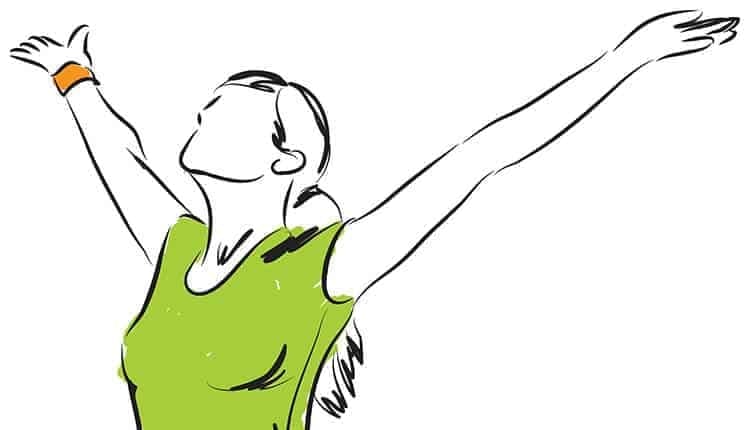
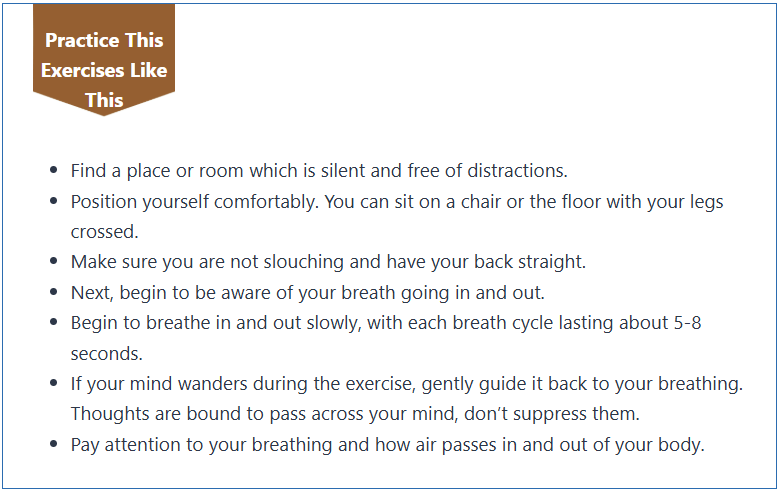
This exercise requires you to focus on your breathing and be aware of the way you inhale and exhale your breath.
Concentrating on your breathing helps take attention away from troubling thoughts and worries.
According to experts, slow controlled, and mindful breathing helps calm the mind and suppress emotional disturbance and panic attacks.
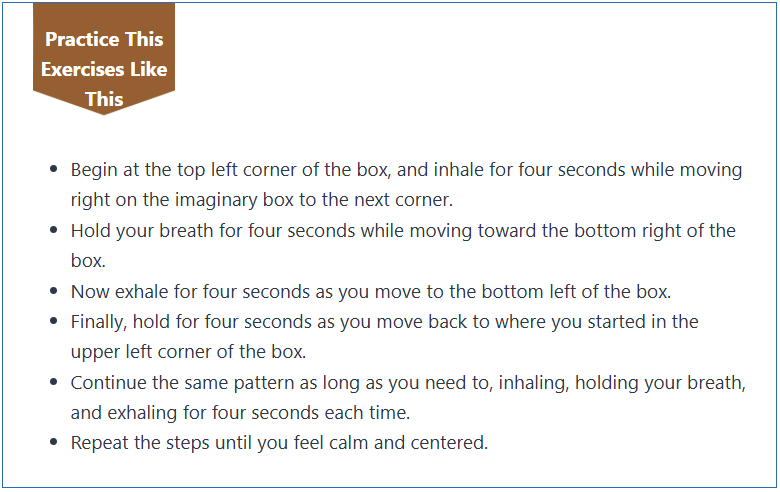
Square/Box Breathing
This technique encourages mindfulness and feeling in the present.
Imagine a square or a box outline and trace it with your finger.
Triangle Breathing
Like box breathing, you are tracing a triangle instead of a square here.
Start in one corner of the triangle and inhale for three seconds.
Then hold for three seconds as you move to the next corner of the triangle.
Finally, exhale for three seconds tracing the triangle with your finger.
Repeat until you feel centered.
Breathing exercises are an excellent mindfulness technique, and this exercise helps ward off panic attacks, manage stressful emotions, and helps calm and clear your mind.
The more you practice this breathing exercise, gradually begin to extend the duration.
Meditation:
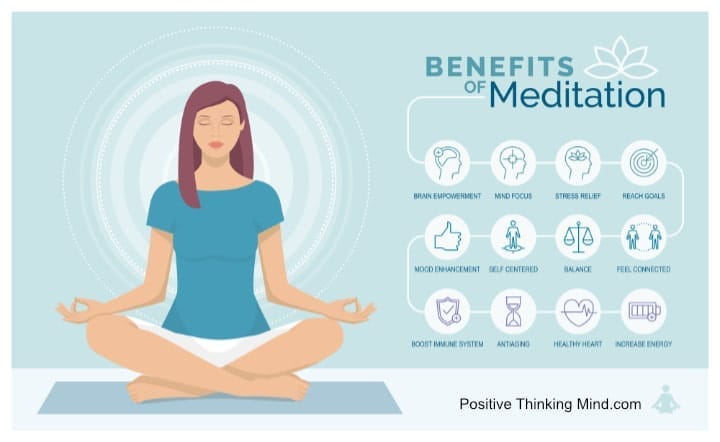
Meditation is a well-known mindfulness exercise for anxiety that helps relieve anxiety symptoms.
Meditation helps relieve stress and worries and is an art anyone can practice.
It is almost effortless and, in most cases, requires a quiet room and a comfortable position.
By meditating, you will achieve a mentally clear and emotionally calm state by focusing your mind on a particular object, thought, or activity.
According to a study published in the Journal of the American Medical Association, meditation plays a fundamental role in reducing the emotional effects of anxiety, stress, and depression.
Extensive surveys were conducted on the individuals in the study who suffered from anxiety and practiced meditation.
The results from the study stated that 60% of anxiety-prone people showed improvements in anxiety levels after 6-9 months.
Let’s go over 5 different ways meditation can be done:
5 Different Ways Meditation Can Be Done
Focusing on your breathing: This meditation is similar to mindful breathing explained above.
Concentrating on a visual object: In this practice, you meditate by focusing on an object until you attain a sense of calm and serenity.
Body Scan: As the name suggests, try to focus on each part of your body in this meditational practice.
It would be best to lie down comfortably, mentally focus, and guide each body part to relax.
The relaxation process begins from your head and moves down to your toes.Visualization: This meditation practice involves imagining being in a safe and secure place that is your sanctuary.
It can be a house, a beach, or a garden. The area should be personalized and specific to you.
Doing so, you’ll find calm and peace by imagining yourself being present in your sanctuary and exploring it.Walking Meditation: This meditation practice involves walking and is helpful for individuals who cannot sit still for a long time.
Practicing this technique, you observe and concentrate on the movement of your feet and experience the connection with the earth.
It is necessary to walk barefoot in a quiet place and experience the calmness that arises from the walking movement.
Mindful Observation:
Another mindful exercise for anxiety is mindful observation, and this practice is straightforward yet powerful and calming.
Mindful observation is a practice in which you pay attention to the present moment without judgment or interpretation.
This means noticing things around you without attaching meaning or value to them. It is a way of being fully present in the moment and allowing things to be as they are.
To practice mindful observation, find a comfortable and quiet place to sit or lie down. Take a few deep breaths and focus on your breath as it moves in and out of your body.
Notice any thoughts or feelings that arise, and try to let them pass without getting caught up in them.
Then, begin to observe your surroundings. Notice the colors, shapes, and textures of objects around you. Listen to the sounds in the environment, and feel any sensations in your body.
Try to simply notice these things without attaching any meaning or value to them.
Mindful observation can help you cultivate a sense of calm and clarity, and can be an effective way to manage stress and anxiety.
It can also help you become more aware of your thoughts and feelings, which can be useful in making decisions and solving problems.
Even if your mind wanders, you need to gently draw your attention and observe every aspect of the object — the color, the shape, the details, the formations.
Allowing yourself to be consumed by its presence will help you connect to its energy and experience a sense of peace and calm.
Mindful Awareness:
Mindful awareness is a straightforward exercise that will remind you to be grateful for the daily blessings in your life.
Mindful awareness is a state of being fully present in the moment, without getting caught up in thoughts, judgments, or emotions.
It is a way of observing your thoughts and feelings without getting attached to them, and a way of being fully aware of your surroundings without getting lost in them.
To practice mindful awareness, find a comfortable and quiet place to sit or lie down.
Take a few deep breaths and focus on your breath as it moves in and out of your body.
Notice any thoughts or feelings that arise, and try to let them pass without getting caught up in them.
Then, begin to observe your surroundings.
Notice the colors, shapes, and textures of objects around you.
Listen to the sounds in the environment, and feel any sensations in your body.
Try to simply notice these things without attaching any meaning or value to them.
As you continue to practice mindful awareness, you may find that your mind becomes more calm and clear.
This can help you to manage stress and anxiety, and can also improve your focus and concentration.
Additionally, being mindful can help you to become more aware of your thoughts and feelings, which can be useful in making decisions and solving problems.
The many small blessings we take for granted bring a sense of gratefulness, joy, and peace to mind.
Being mindful helps overcome thoughts of anxiety and depression.
Mindful Listening:
Sometimes certain sounds are linked with painful memories and can be a source of anxiety.
The idea of this mindful practice is to experience these sounds from a non-judgmental perspective.
Release the negative power it has over you.
For example, a particular song may be associated with painful memories of a known person who is either deceased or is not in contact with you.
Playing a song and listening to it as though hearing it the first time.
Concentrating on the singer’s voice, the instruments being played, and the ranges of the sound can all help minimize the emotional effect it has on you.
Mindful listening is a practice in which you pay attention to the sounds around you without getting caught up in your thoughts or judgments.
It is a way of being fully present in the moment and allowing sounds to be as they are.
To practice mindful listening, find a comfortable and quiet place to sit or lie down.
Take a few deep breaths and focus on your breath as it moves in and out of your body.
Notice any thoughts or feelings that arise, and try to let them pass without getting caught up in them.
Then, begin to listen to the sounds around you. Notice the different sounds, and try to identify where they are coming from.
Pay attention to the quality of the sounds, such as whether they are high or low, loud or soft, clear or muffled.
As you continue to listen mindfully, try not to attach any meaning or value to the sounds you hear.
Just let them be as they are, without trying to interpret or judge them. This can help you to cultivate a sense of calm and focus, and can also help you to be more present in the moment.
Mindful Immersion:
Mindful immersion helps me look at everyday tasks with a new and refreshing perspective.
Daily chores like cleaning, cooking, and dishwashing, dull and considered sources of anxiety and worry, are turned into opportunities for peace, calm, and relaxation.
Mindful immersion is a state of being fully present and engaged in an activity or experience without getting caught up in thoughts, judgments, or emotions.
It is a way of fully experiencing something without getting distracted or overwhelmed.
To practice mindful immersion, choose an activity or experience that you enjoy and that allows you to focus your attention, such as gardening, cooking, painting, or listening to music.
Then, take a few deep breaths and focus on your breath as it moves in and out of your body.
Notice any thoughts or feelings that arise, and try to let them pass without getting caught up in them.
As you begin the activity, try to focus all of your attention on it.
Notice the sights, sounds, and sensations that arise, and try to be fully present with them.
Avoid getting caught up in your thoughts or judgments, and instead try to simply experience the activity.
Practicing mindful immersion can help you to enjoy the activity or experience more fully, and can also help you to cultivate a sense of calm and focus.
It can also be a useful way to manage stress and anxiety, and can help you to be more present and engaged in your daily life.
Anchoring:
An anchor is a device lowered into the sea to stabilize a ship or a boat in rough weather.
Similarly, this meditational practice calms anxious thoughts and feelings by drawing our attention to the lower part of the body.
Beginning with the toes, focus on the various sensations you experience in your feet, lower legs, and upper legs.
Identify the various feelings, for example, if you are hot or cold, heavy or light and if the muscles in your legs are relaxed or strained.
Finally, put all of your focus on breathing and relaxation with every breath taken.
You can do this exercise while sitting, standing, or walking; anchoring can be done anywhere, anytime.
Finger Breathing:
Finger breathing is an excellent mindfulness exercise for anxiety practice that can be used when you cannot focus genuinely.
Finger breathing is so simple that children can also be taught to calm themselves down when stressed or anxious.
It involves using your fingers to focus your attention on your breath, and can be done anywhere and at any time.
To practice finger breathing, sit or stand in a comfortable position and take a few deep breaths.
Then, use your fingers to count each breath as you exhale.
You can use any finger to count each breath, or you can use a specific finger for each breath (e.g. index finger for the first breath, middle finger for the second breath, and so on).
As you count each breath, focus your attention on the sensation of your breath moving in and out of your body.
Notice the rise and fall of your chest or abdomen, and the sensation of the air passing through your nostrils.
Try to let go of any other thoughts or distractions, and just focus on your breath and the sensation of your fingers moving.
Finger breathing can help you to cultivate a sense of calm and focus, and can be a useful tool for managing stress and anxiety.
It is also a simple and discreet way to practice mindfulness, as you can do it without anyone noticing.

How To Finger Breath:
Stretch the palm of one hand out in front of you or on the ground.
Using your other hand’s index or pointer finger, trace up the outside of your thumb and inhale.
Now exhale while you trace down the inside of your thumb.
Repeat this for the remaining fingers, making sure you inhale when tracing up and exhale when tracing down.
When finished, pause to reflect on your feelings and, if needed, repeat the practice.
Yoga:
Yoga is an ancient art that includes physical exercise, meditation practices, and breathing exercises.
Practicing yoga will help strengthen your body and relieve anxiety, stress, and depression symptoms.
According to a study, practicing yoga helps attain a sense of peace and a feeling of oneness with the environment.
Research conducted by Georgia University found that yoga was highly effective in reducing worry, a primary symptom of anxiety.
Mindful Journaling:
Journaling is a great way to vent out emotions and record thoughts and feelings.
It’s also a tremendous mindful practice as it helps express what is on your heart and mind.
According to Jeff Krasno, “Journaling is the act of tapping into your stream of consciousness – where there is no right or wrong – just finding your flow.”
Lifehack.org states that writing a mindful journal has several benefits.
It helps us be grateful, make better decisions, organize, assign meaning to our emotions, and reduce anxiety symptoms.
Mindful journaling is a practice in which you use writing to explore your thoughts, feelings, and experiences in a mindful and non-judgmental way.
It is a way of expressing yourself and reflecting on your life, and can be a useful tool for managing stress and anxiety.
To practice mindful journaling, find a quiet and comfortable place to sit and write.
Take a few deep breaths and focus on your breath as it moves in and out of your body.
Notice any thoughts or feelings that arise, and try to let them pass without getting caught up in them.
Then, begin to write about your experiences, thoughts, and feelings.
Try to be as honest and authentic as possible, and avoid judging or censoring yourself.
You can write about anything that comes to mind, from your daily activities and experiences to your deepest thoughts and feelings.
As you continue to write, try to stay present and focused on the present moment.
Notice any thoughts or feelings that arise, and try to let them be without getting attached to them.
This can help you to cultivate a sense of calm and clarity, and can also be a useful tool for managing stress and anxiety.
Go For A Mindful Walk
Keeping active is helpful for anxiety, as being sedentary causes you to overthink, have negative thoughts, and bring on anxiety.
Go for a mindful walk outdoors in nature and pay attention to what’s around you.
The trees, flowers, birds flying around, and the squirrels gathering nuts, keep your attention on the calming acts of nature.
What do you smell? What do you feel? What does the air feel like against your skin? Do you feel the warmth of the sun?
When you become anxious, notice your feelings and return to your mindful activity.
Final Thoughts
Anxiety and its symptoms can be crippling, but practicing mindfulness can help you move forward.
Using mindful exercises can put your life into perspective, help reduce your reactiveness, encourage you, and build resilience.
Mindfulness exercises for anxiety can help you feel calmer and relaxed and increase your overall well-being.
Mindfulness is an attitude towards life and living through situations you encounter.
Living a mindful life, being fully anchored in the present moment, and taking a positive approach to yourself, others and situations can help with anxiety and other mental health challenges.
Positive Thinking Mind
Master Life Coach
Certified life coach, course creator, YouTube and Podcast Creator, dedicated to transforming lives through personal growth, mental wellness, and nurturing a positive mindset. My mission is to make life better for individuals seeking self-improvement and confidence-building. About Me
You'll be handed a self-esteem-boosting set of tips and abilities, actions and best practices that can continually and repeatedly raise your self-image and self-esteem. You're capable of so much and deserve to be happy!
This is what differentiates winners from losers.
“The Power Of Positive Thinking” is the ultimate blueprint for people who want to progress further in life with a simple mindset switch.
Welcome to PositiveThinkingMind.com! We’re on a mission to bring solutions that shape people's lives through personal growth, mental wellness, a positive mindset and make life better. Let Your Light Shine!
PositiveThinkingMind.com is a participant in the Amazon Services LLC Associates Program, an affiliate advertising program designed to provide a means for sites to earn advertising fees by advertising and linking to amazon.com and affiliated sites.
Categories
Disclaimer: This site contains affiliate links, which means we earn a commission if you purchase through our link at no additional cost to you. Articles and information on this site is not medical advice. If you have mental problems, please talk to a doctor or therapist to get the help you deserve. Please read our full disclaimer .
Quick links
Newsletter
Subscribe now get tips.
© 2025 Positive Thinking Mind LLC